








Frequently Asked Questions
What types of airborne contaminants do AiroCide® photocatalytic air purification systems eliminate?
AiroCide air purifiers completely destroy 99.99% of bacteria, moulds, fungi, viruses, volatile organic compounds (VOCs such as ethylene gas) and odours.
What makes AiroCide air purifiers different from other air purifiers?
Two distinct characteristics differentiate AiroCide air purifiers from the competition. First of all, it is not a filtering system. The technology is based on the immediate destruction of airborne contaminants, not on trapping or collecting them in a filter. Secondly, many other air purifiers produce ozone, which is released into the air. AiroCide air purifiers do not produce ozone and are the only air purifiers to completely destroy pathogens passing through a photocatalytic oxidation (PCO) chamber.
What makes photocatalytic oxidation technology different from others on the market?
Other technologies using titanium dioxide (TiO2) coated materials that claim to oxidise or destroy pathogens have proven ineffective due to the slow efficiency of oxidation. AiroCide’s patented technology uses nanoparticle science to create a titanium oxide coating that is photocatalytically active and also bonds to the applied surfaces without delamination. Nanotechnology encompasses technological developments on the nanometre scale, generally from 0.1 to 100 nm, or ten thousand times smaller than the width of a human hair.
Can AiroCide photocatalytic air purifiers eliminate ozone already existing in a room?
Tests have shown that the oxidation reaction inherent in the photocatalytic oxidation (PCO) chamber will convert ozone into oxygen. So not only do AiroCide air purifiers differ from many other air purifiers by not generating ozone, they also help eliminate ozone produced by other sources in the environment.
Will it help with my allergies / asthma?
Many of the most common and well-known airborne factors, such as moulds, fungi, pet dander and dust mites, which trigger chronic respiratory disorders such as allergies and asthma, are easily killed and removed.
What types of companies and sectors use AiroCide air purification technology?
Applications range from quality control and food safety of perishable products in food processing industries to medical healthcare (AiroCide air purification systems are FDA Class II listed medical devices) and many other commercial (offices, shops) and residential uses for indoor air quality.
How does it work?
The patented technology combines two pathogen elimination technologies, photocatalytic oxidation (PCO) and ultraviolet light, to destroy harmful airborne pathogens. Titanium dioxide (TiO2) is the photocatalyst used in AiroCide air purification systems. When this material is irradiated with ultraviolet photons from the internal lamps, hydroxyl radicals are formed which oxidise volatile organic compounds (VOCs) and kill and decompose airborne pathogens. AiroCide air purification systems do not produce ozone and are not a filtering system
Are there filters to replace?
AiroCide air purifiers are not a filtering system and there are no filter media to replace. The fan guard protects the internal workings of the device from large particles. It is advisable to check whether there are deposits on the grille to be removed.
.
Does the front grille of the appliance require special care or cleaning?
It is worth dusting the appliance from time to time like any other appliance in the house, but it does not require special treatment.
How many fans does Airocide have?
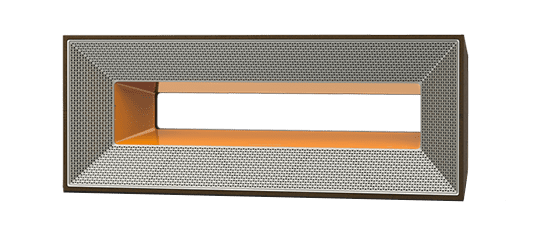
The Airocide has an internal fan. Using aerodynamic flow (the “Coanda effect”), the fan draws air through an opening in the front of the unit, which accelerates through the two reaction chambers and then exits through the central rear outlet of the unit. With this accelerated movement, clean air can flow through the room using the minimum amount of energy.
If there is a fan to move the air, how much noise does it generate
Yes, a fan draws air inside and through the photocatalytic chamber. The noise of the air movement and fan rotation can be heard but the noise levels are much lower than most air “filtering” devices. The actual noise level in decibels is close to conversation levels.
Do I need a technician to change the ultraviolet lamps or can I do it myself?
Changing the lamp is very simple and does not require special tools or skills.
What maintenance does the Airocide air purifier require?
The only maintenance required for the device is the annual replacement of the reaction chambers. In case of continuous operation, this must be done approximately once a year. Replacement is indicated by the light on the device: when it comes on, the reaction chambers must be replaced.
Is the odour emitted by the appliance normal after the first switch-on? How long does it take?
You may notice a slight odour the first time you turn it on. This is normal and is caused by the first heating of the UV lamps. This phenomenon will completely disappear within a few days.
What does the "auto" button on the device mean?
It indicates the automatic mode of the device. In this mode, the device automatically switches between low and high modes. The alternation is controlled by a light sensor: at night it sets the unit to a quieter “low” operating mode to ensure the most peaceful rest, while during the day it sets it to a higher efficiency mode for maximum air cleaning efficiency.
What positioning of Airocide is recommended to achieve the optimal air purification effect?
For optimal results, place the device at a height of 120-180 cm from the floor. Do not place it in a small enclosed space such as a bookcase shelf.
CONTACT US
For more information or to receive a personalised quote, and all the useful instructions for payment via PayPal or bank transfer
Richieste dal sito Egoeimisrl.it